Format - Thought Logistics Mapping
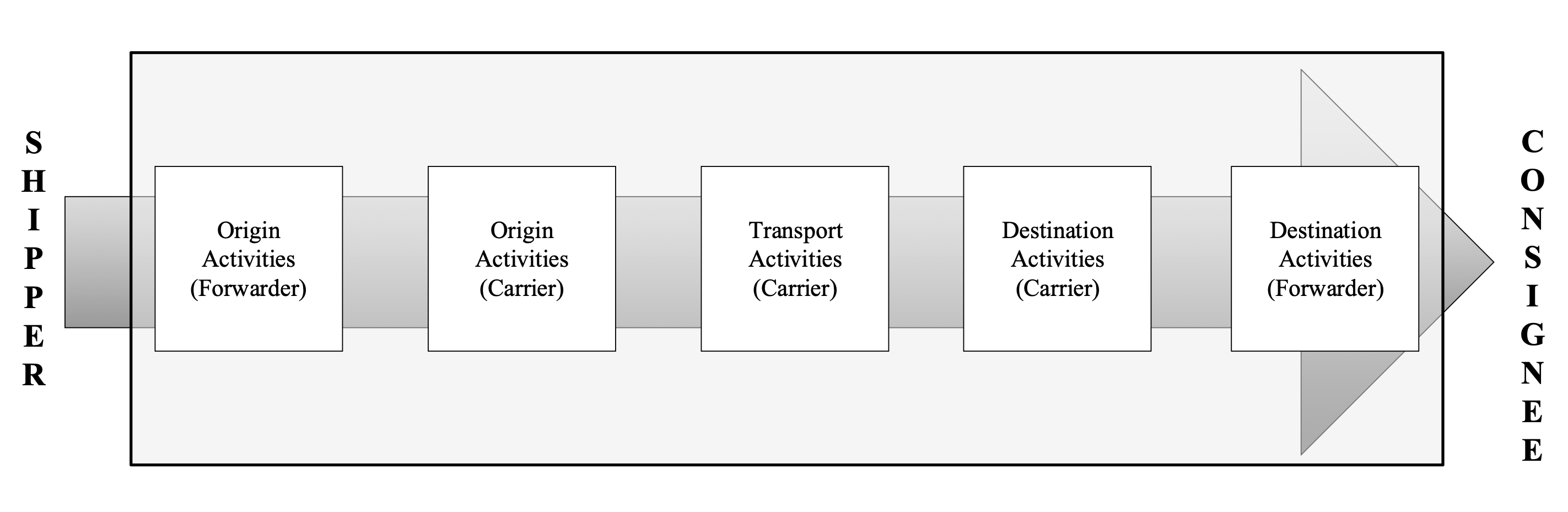 [Use the Air Cargo Industry MOP as a reference for the idea map]
Each node represents a PERSON (who is a warehouse)
Each strand represents a THOUGHT.
Each block represents a REGION.
The degree of the forces of attraction/repulsion between people, thoughts and regions defines OUTCOMES.
OUTCOMES can be results of both intended and unintended activities, all of them stemming from the flow of individual thoughts.
That's why studying thought logistics has become imperative.
OUTCOMES can be examined using the Supply-Demand loop. This involves multiple types of people/agents.
In a world before the internet, communication was simpler, hence fairly limited.
- Consignee: Highlights the demand request as per their own needs (based on Maslow's hierarchy)
- Shipper: Initiates the supply of thought.
- Agent: Acted as a third-party between the consignee and shipper.
20251028_EveryPersonAWarehouse_pen
In our current digital ecosystem, the following agents are involved.
- Forwarder: Collects the thought from the origin (shipper's direct connections) and sends the data in a transferrable format.
- Carrier: Collects the thought shipment (the idea in its compartmentalized form) prepared by the forwarder and dispatches it to the destination.
- The thought is transferred along with multitudes of other thought shipments.
- Break bulk agent: Represents the consignee in encountering the master shipment as it is and sorting out the required thought shipments. Break bulk agent (representing the reactionary part of ourselves) decides the flow of the idea involved in this shipment.
- The idea then reaches the consignee.
- The impact of the idea received, in almost all instances, leads to a new demand.
*But since a certain amount of time passes between the origin of the idea and its reception, and that there are multiple agents required for a single transaction to happen, the idea in it's purest, most influential form, may tend to be lost in translation.
List of needs (based on 20240609_Maslow'sHierarchyOfNeeds_info
- Physiological needs;
Sufficient levels of food and water, and access to shelter and medicine. - Safety needs;
Sufficient financial freedom, social and political security. - Belonging & love needs;
Closeness with family, friends, intimacy with partner - Esteem needs;
Respect, self-worth, popularity, pride, and status - Self-actualization needs;
Cognitive, aesthetic, creative, and transcendental desires
POVs:
2 different scopes;
- Person-to-person (hedonistic); origin of thought, planning, tracking, and fulfillment/deviation of expectations
- Outcome to outcome (utilitarian); impact of overall ideas involved and the outcomes induced
A combination of both designs may be crucial in planning for effective thought logistics.
Person-to-person Design
1. Purpose
It's the moral compass in our lives.
2. Objective
This is an action item that must be completed to keep pursuing our purpose.
3. Social Capital
This outlines the start conditions of each player.
4. Supply - Emotion
The inherent difference between a person's Social Capital and a collection of objectives. The supply of emotions is our reaction to the external circumstances which influence our social capital.
Our supply of emotion will be the main motive driving us to achieving our ideal life.
5. Demand - Reason
The logical framework required to bridge the gap between where we are and where we want to be. The cost of meeting this demand of effortful reason is tied with the extent of our supply of emotion.